当前位置:网站首页>赛氪-二进制
赛氪-二进制
2022-04-23 05:51:00 【Round moon】
二进制
题目描述
你是一个算法爱好者,在努力学习计算机知识。你知道,计算机最优美的地方在于二进制,这一点你在状压加o里面深有体会,当然二进制用在co and o时的也非常巧妙,更不用T说nini游戏都能跟于xor扯上关系了,而今天你又遇到了一道二进制的题目,对于爱思考的你,决定一直要把这道二进制题给切掉。
你遇到了很多十进制的数,对于这些数,它们都管理着它们对应的分层,比如数字8,它的二进制是1,则它管理着4(10),2(10),两个分段,当数字闯的在2,4区间上增加时,沬代表二进制(10)和(10)两层在[2,4]区间增加3。
本道题有两种操作,读入一个opt
opt为1时:读入一个数qi,一个区间li, ri和一个增加的值ki,表示在这个数管理的分层中的每一个区间增加ki值。
opt为2时:读入一个数ai,一个区间li,ri,表示询问这个数管理的分层中每一个区间的值的总和。
输入
第一行两个整数n,q,表示n表示区间长度(1≤li ≤ri ≤n≤100000),q表示有q(1≤q≤100000)次操作。数据保证(1≤ai≤1024),ki在int范围内
后面q行,每行首先一个数opt表示进行的操作
opt= 1时后接整数ai表示管理分层,li,ri表示区间,ki表示增加的值opt= 2时后接整数ai表示管理分层,li,ri表示区间
输出
对于每个第二个操作,输出一行表示询问的答案。
Sample Input
5 3
1 3 1 5 2
2 1 1 2
2 3 1 2
Sample Output
4
8
思路解析
开12个线段树,别问为什么是12个问就是我不想卡边界。
然后侦测该数的二进制位是1的序号,入栈(队列),然后依次维护该序列号的线段树。
最后读取的时候,也是把所有序号的线段树查询一遍,求一个和就OK了。
Accepted Code
//#include<unordered_map>
#include<algorithm>
#include<iostream>
#include<string.h>
#include <iomanip>
#include<stdio.h>
#include<vector>
#include<string>
#include<math.h>
#include<cmath>
#include<queue>
#include<stack>
#include<deque>
#include<map>
#include<set>
using namespace std;
typedef long long ll;
typedef unsigned long long ull;
const ll ll_inf = 9223372036854775807;
const int int_inf = 2147483647;
const short short_inf = 32767;
const ll less_inf = 0x3f3f3f3f;
const char char_inf = 127;
#pragma GCC optimize(2)
#define accelerate cin.tie(NULL);cout.tie(NULL);ios::sync_with_stdio(false);
#define PI 3.141592653589793
#define EPS 1.0e-8
ll gcd(ll a, ll b) {

	return b ? gcd(b, a % b) : a;
}
ll lcm(ll a, ll b) {

	return a / gcd(a, b) * b;
}
inline ll read() {

	ll c = getchar(), Nig = 1, x = 0;
	while (!isdigit(c) && c != '-')c = getchar();
	if (c == '-')Nig = -1, c = getchar();
	while (isdigit(c))x = ((x << 1) + (x << 3)) + (c ^ '0'), c = getchar();
	return Nig * x;
}
inline void out(ll a) {

	if (a < 0)putchar('-'), a = -a;
	if (a > 9)out(a / 10);
	putchar(a % 10 + '0');
}
ll qpow(ll x, ll n, ll mod) {

	ll res = 1;
	while (n > 0) {

		if (n & 1)res = (res * x) % mod;
		x = (x * x) % mod;
		n >>= 1;
	}
	return res;
}
#define read read()
const int N = 100007;
struct node
{

	ll sum, num;
	bool lazy;
}tree[12][N << 2];
void pushup(int k, int rt)
{

	tree[k][rt].sum = tree[k][rt << 1].sum + tree[k][rt << 1|1].sum;
}
void pushdown(int k, int len, int rt)
{

	if (tree[k][rt].lazy)
	{

		tree[k][rt << 1].lazy = tree[k][rt << 1 | 1].lazy = true;
		tree[k][rt].lazy = false;
		tree[k][rt << 1].num += tree[k][rt].num;
		tree[k][rt << 1 | 1].num += tree[k][rt].num;
		tree[k][rt << 1].sum += tree[k][rt].num * (len - (len >> 1));
		tree[k][rt << 1 | 1].sum += tree[k][rt].num * (len >> 1);
		tree[k][rt].num = 0;
	}
}
void update(int L, int R, ll val, int k, int l, int r, int rt)
{

	if (L <= l && r <= R)
	{

		tree[k][rt].lazy = true;
		tree[k][rt].num += val;
		tree[k][rt].sum += (r - l + 1) * val;
		return;
	}
	pushdown(k, r - l + 1, rt);
	int mid = l + r >> 1;
	if (L <= mid)update(L, R, val, k, l, mid, rt << 1);
	if (R >= mid + 1)update(L, R, val, k, mid + 1, r, rt << 1 | 1);
	pushup(k, rt);
}
ll query(int L, int R, int k, int l, int r, int rt)
{

	if (L <= l && r <= R)return tree[k][rt].sum;
	pushdown(k, r - l + 1, rt);
	int mid = l + r >> 1;
	ll res = 0;
	if (L <= mid)res += query(L, R, k, l, mid, rt << 1);
	if (R > mid)res += query(L, R, k, mid + 1, r, rt << 1 | 1);
	return res;
}
stack<ll>s;
int main()
{

	accelerate;
	int n, m;
	cin >> n >> m;
	while (m--)
	{

		ll mark, id;
		cin >> mark >> id;
		if (mark == 1)
		{

			for (ll i = 1, cnt = 0; i <= 1024; i <<= 1, cnt++)
				if (i & id)s.push(cnt);
			ll l, r, val;
			cin >> l >> r >> val;
			while (!s.empty())
			{

				ll now = s.top();
				s.pop();
				update(l, r, val, now, 1, n, 1);
			}
		}
		else
		{

			for (ll i = 1, cnt = 0; i <= 1024; i <<= 1, cnt++)
				if (i & id)s.push(cnt);
			ll ans = 0;
			ll l, r;
			cin >> l >> r;
			while (!s.empty())
			{

				ll now = s.top();
				s.pop();
				ans += query(l, r, now, 1, n, 1);
			}
			cout << ans << endl;
		}
	}
}
By-Round Moon
版权声明
本文为[Round moon]所创,转载请带上原文链接,感谢
https://blog.csdn.net/qq_35339563/article/details/120935988
边栏推荐
猜你喜欢
PHP junior programmers, take orders and earn extra money
Opencv uses genericindex for KNN search
![[UDS unified diagnostic service] II. Network layer protocol (2) - data transmission rules (single frame and multi frame)](/img/4f/315a9b4cd85ebaad39cfa985dea45b.png)
[UDS unified diagnostic service] II. Network layer protocol (2) - data transmission rules (single frame and multi frame)

类的继承与派生
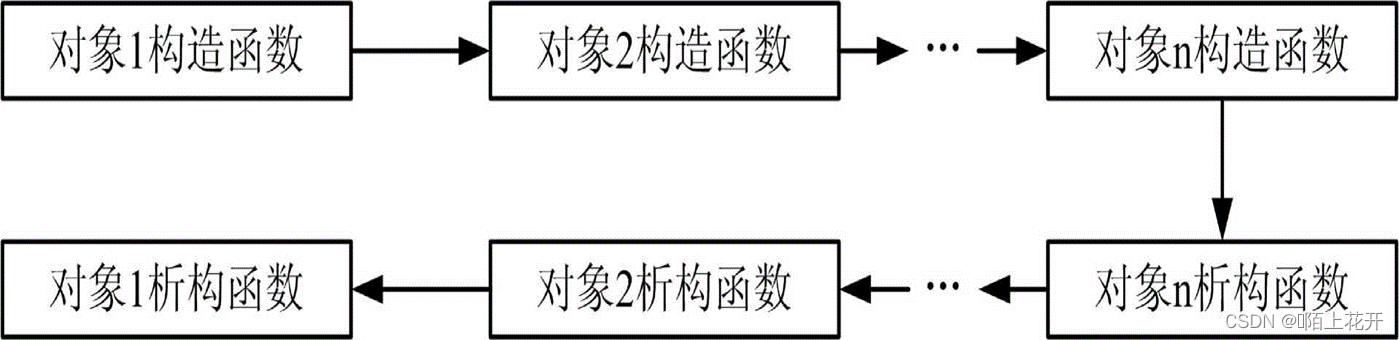
Initialization of classes and objects (constructors and destructors)

File viewing commands and user management commands
基于Keras的时装分类案例
Vscode custom comments
![[UDS unified diagnostic service] IV. typical diagnostic service (2) - data transmission function unit](/img/22/c501c79176a93345dc72ff150c53c3.png)
[UDS unified diagnostic service] IV. typical diagnostic service (2) - data transmission function unit
![[UDS unified diagnosis service] i. diagnosis overview (3) - ISO 15765 architecture](/img/ef/173281ffb354b9abe1b730b89469cc.png)
[UDS unified diagnosis service] i. diagnosis overview (3) - ISO 15765 architecture
随机推荐
The waterfall waterfall flow of uview realizes single column and loads more
Graduation project, curriculum link, student achievement evaluation system
Programmers can also write novels
PM2 deploy nuxt related commands
Object array and object pointer
Make your own small program
【UDS统一诊断服务】四、诊断典型服务(3)— 读故障信息功能单元(存储数据传输功能单元)
Notes on advanced points of C language 5
undefined reference to `Nabo::NearestNeighbourSearch
VHDL-任意分频器(50%占空比)
POJ-The Unique MST
客户端软件增量更新
类的继承与派生
【UDS统一诊断服务】四、诊断典型服务(2)— 数据传输功能单元
LaTeX配置与使用
C语言实现memcpy、memset、strcpy、strncpy、strcmp、strncmp、strlen
TensorFlow张量介绍
Initialization of classes and objects (constructors and destructors)
Vscode custom comments
[UDS unified diagnosis service] IV. typical diagnosis service (3) - read fault information function unit (storage data transmission function unit)