An evaluation toolkit for voice conversion models.

Overview

Voice-conversion-evaluation

An evaluation toolkit for voice conversion models.

Sample test pair

Generate the metadata for evaluating models.
The directory of parsers contains several available corpus parsers.

  python sampler.py [name of source corpus] [path of source dir] [name of target corpus] [path of target dir] -n [number of samples] -nt [number of target utterances] -o [path of output dir]

The pairs of metadata are sorted by src_second for long to short.
The metadata contains:

  • source_corpus: The name of the source corpus.
  • source_corpus_speaker_number: The number of speaker in source corpus.
  • source_random_seed: Random seed used for sampling source utterance.
  • target_corpus: The name of the target corpus.
  • target_corpus_speaker_number: The number of speaker in target corpus.
  • target_random_seed: Random seed used for sampling target utterances.
  • n_samples: number of samples
  • n_target_samples: number of target utterances
  • pairs: List of evaluating pairs
    • source_speaker: The name of the source speaker.
    • target_speaker: The name of the target speaker.
    • src_utt: The relative path of the source utterance, which is relative to the source dir.
    • tgt_utts: List of the relative path of target utterances, which is relative to the target dir.
    • content: The content of the source utterance.
    • src_second: The second of the source utterance.
    • converted: The entry does not appear when use sampler, you need to add the relative path for your converted output.

Metrics

The metrics include automatic mean opinion score assessment, character error rate, and speaker verification acceptance rate.

  • Automatic mean opinion score assessment
    • Ensemble several MBNet which is implemented by sky1456723.
      python calculate_objective_metric.py -d [data_dir] -r metrics/mean_opinion_score
    
  • Character error rate:
    • Use the automatic speech recognition model provided by Hugging Face.
    • The word error rate on Librispeech test-other is 3.9.
      python calculate_objective_metric.py -d [data_dir] -r metrics/character_error_rate
    
  • Speaker verification acceptance rate:
    • You can calculate the threshold by metrics/speaker_verification/equal_error_rate/.
    • And some pre-calculated thresholds are in metrics/speaker_verification/equal_error_rate/threshold.yaml.
      python calculate_objective_metric.py -d [data_dir] -r metrics/speaker_verification -t [target_dir] -th [threshold path]
    
You might also like...
Voice assistant - Voice assistant with python

🌐 Python Voice Assistant 🌵 - User's greeting 🌵 - Writing tasks to todo-list ?

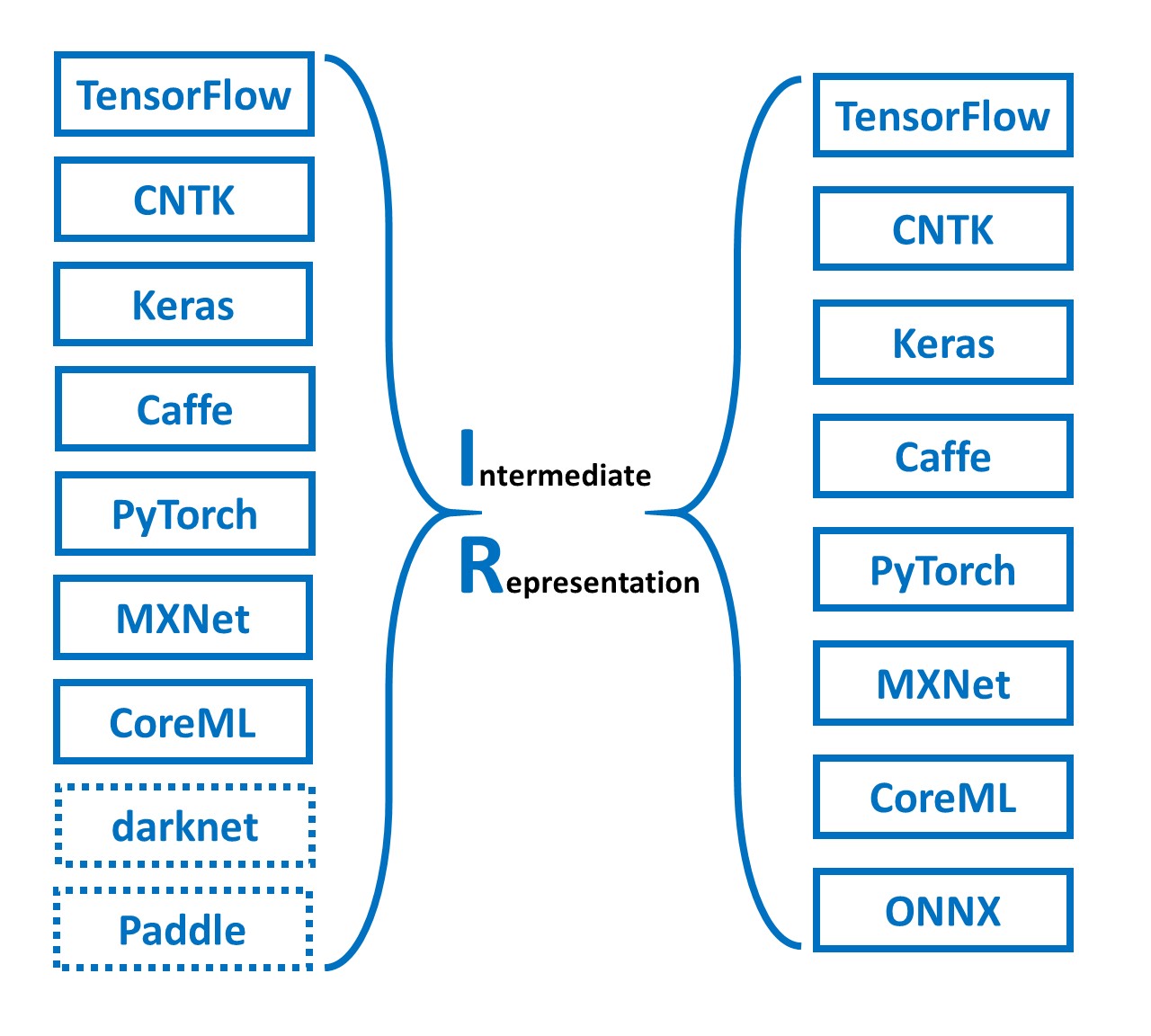
MMdnn is a set of tools to help users inter-operate among different deep learning frameworks. E.g. model conversion and visualization. Convert models between Caffe, Keras, MXNet, Tensorflow, CNTK, PyTorch Onnx and CoreML.

MMdnn MMdnn is a comprehensive and cross-framework tool to convert, visualize and diagnose deep learning (DL) models. The "MM" stands for model manage

SIMULEVAL A General Evaluation Toolkit for Simultaneous Translation

SimulEval SimulEval is a general evaluation framework for simultaneous translation on text and speech. Requirement python = 3.7.0 Installation git cl

Microsoft Cognitive Toolkit (CNTK), an open source deep-learning toolkit

CNTK Chat Windows build status Linux build status The Microsoft Cognitive Toolkit (https://cntk.ai) is a unified deep learning toolkit that describes

Microsoft Cognitive Toolkit (CNTK), an open source deep-learning toolkit

CNTK Chat Windows build status Linux build status The Microsoft Cognitive Toolkit (https://cntk.ai) is a unified deep learning toolkit that describes

This project is a loose implementation of paper "Algorithmic Financial Trading with Deep Convolutional Neural Networks: Time Series to Image Conversion Approach"

Stock Market Buy/Sell/Hold prediction Using convolutional Neural Network This repo is an attempt to implement the research paper titled "Algorithmic F

PlenOctrees: NeRF-SH Training & Conversion

PlenOctrees Official Repo: NeRF-SH training and conversion This repository contains code to train NeRF-SH and to extract the PlenOctree, constituting

Implementation for "Manga Filling Style Conversion with Screentone Variational Autoencoder" (SIGGRAPH ASIA 2020 issue)

Manga Filling with ScreenVAE SIGGRAPH ASIA 2020 | Project Website | BibTex This repository is for ScreenVAE introduced in the following paper "Manga F

[ICCV2021] IICNet: A Generic Framework for Reversible Image Conversion
[ICCV2021] IICNet: A Generic Framework for Reversible Image Conversion

IICNet - Invertible Image Conversion Net Official PyTorch Implementation for IICNet: A Generic Framework for Reversible Image Conversion (ICCV2021). D

Releases(checkpoints)
This repository is the official implementation of the Hybrid Self-Attention NEAT algorithm.

This repository is the official implementation of the Hybrid Self-Attention NEAT algorithm. It contains the code to reproduce the results presented in the original paper: https://arxiv.org/abs/2112.0

Saman Khamesian 6 Dec 13, 2022
Accelerating BERT Inference for Sequence Labeling via Early-Exit

Sequence-Labeling-Early-Exit Code for ACL 2021 paper: Accelerating BERT Inference for Sequence Labeling via Early-Exit Requirement: Please refer to re

李孝男 23 Oct 14, 2022
This program will stylize your photos with fast neural style transfer.

Neural Style Transfer (NST) Using TensorFlow Demo TensorFlow TensorFlow is an end-to-end open source platform for machine learning. It has a comprehen

Ismail Boularbah 1 Aug 08, 2022
Low-code/No-code approach for deep learning inference on devices

EzEdgeAI A concept project that uses a low-code/no-code approach to implement deep learning inference on devices. It provides a componentized framewor

On-Device AI Co., Ltd. 7 Apr 05, 2022
Tracing Versus Freehand for Evaluating Computer-Generated Drawings (SIGGRAPH 2021)

Tracing Versus Freehand for Evaluating Computer-Generated Drawings (SIGGRAPH 2021) Zeyu Wang, Sherry Qiu, Nicole Feng, Holly Rushmeier, Leonard McMill

Zach Zeyu Wang 23 Dec 09, 2022
Towards Ultra-Resolution Neural Style Transfer via Thumbnail Instance Normalization

Towards Ultra-Resolution Neural Style Transfer via Thumbnail Instance Normalization Official PyTorch implementation for our URST (Ultra-Resolution Sty

czczup 148 Dec 27, 2022
A set of Deep Reinforcement Learning Agents implemented in Tensorflow.

Deep Reinforcement Learning Agents This repository contains a collection of reinforcement learning algorithms written in Tensorflow. The ipython noteb

Arthur Juliani 2.2k Jan 01, 2023
MarcoPolo is a clustering-free approach to the exploration of bimodally expressed genes along with group information in single-cell RNA-seq data

MarcoPolo is a method to discover differentially expressed genes in single-cell RNA-seq data without depending on prior clustering Overview MarcoPolo

Chanwoo Kim 13 Dec 18, 2022
Rasterize with the least efforts for researchers.

utils3d Rasterize and do image-based 3D transforms with the least efforts for researchers. Based on numpy and OpenGL. It could be helpful when you wan

Ruicheng Wang 8 Dec 15, 2022
Pytorch implementation for the Temporal and Object Quantification Networks (TOQ-Nets).

TOQ-Nets-PyTorch-Release Pytorch implementation for the Temporal and Object Quantification Networks (TOQ-Nets). Temporal and Object Quantification Net

Zhezheng Luo 9 Jun 30, 2022
Reimplementation of Dynamic Multi-scale filters for Semantic Segmentation.

Paddle implementation of Dynamic Multi-scale filters for Semantic Segmentation.

Hongqiang.Wang 2 Nov 01, 2021
Towards Interpretable Deep Metric Learning with Structural Matching

DIML Created by Wenliang Zhao*, Yongming Rao*, Ziyi Wang, Jiwen Lu, Jie Zhou This repository contains PyTorch implementation for paper Towards Interpr

Wenliang Zhao 75 Nov 11, 2022
Occlusion robust 3D face reconstruction model in CFR-GAN (WACV 2022)

Occlusion Robust 3D face Reconstruction Yeong-Joon Ju, Gun-Hee Lee, Jung-Ho Hong, and Seong-Whan Lee Code for Occlusion Robust 3D Face Reconstruction

Yeongjoon 31 Dec 19, 2022
Voice Gender Recognition

In this project it was used some different Machine Learning models to identify the gender of a voice (Female or Male) based on some specific speech and voice attributes.

Anne Livia 1 Jan 27, 2022
Python scripts form performing stereo depth estimation using the high res stereo model in PyTorch .

PyTorch-High-Res-Stereo-Depth-Estimation Python scripts form performing stereo depth estimation using the high res stereo model in PyTorch. Stereo dep

Ibai Gorordo 26 Nov 24, 2022
MaRS - a recursive filtering framework that allows for truly modular multi-sensor integration

The Modular and Robust State-Estimation Framework, or short, MaRS, is a recursive filtering framework that allows for truly modular multi-sensor integration

Control of Networked Systems - University of Klagenfurt 143 Dec 29, 2022
Stable Neural ODE with Lyapunov-Stable Equilibrium Points for Defending Against Adversarial Attacks

Stable Neural ODE with Lyapunov-Stable Equilibrium Points for Defending Against Adversarial Attacks Stable Neural ODE with Lyapunov-Stable Equilibrium

Kang Qiyu 8 Dec 12, 2022
Xi Dongbo 78 Nov 29, 2022
[CIKM 2021] Enhancing Aspect-Based Sentiment Analysis with Supervised Contrastive Learning

Enhancing Aspect-Based Sentiment Analysis with Supervised Contrastive Learning. This repo contains the PyTorch code and implementation for the paper E

Akuchi 18 Dec 22, 2022
PyTorch implementation of DUL (Data Uncertainty Learning in Face Recognition, CVPR2020)

PyTorch implementation of DUL (Data Uncertainty Learning in Face Recognition, CVPR2020)

Mouxiao Huang 20 Nov 15, 2022