Nonnegative spatial factorization for multivariate count data

Overview

Nonnegative spatial factorization for multivariate count data

This repository contains supporting code to facilitate reproducible analysis. For details see the preprint. If you find bugs please create a github issue.

Authors

Will Townes and Barbara Engelhardt

Abstract

Gaussian processes are widely used for the analysis of spatial data due to their nonparametric flexibility and ability to quantify uncertainty, and recently developed scalable approximations have facilitated application to massive datasets. For multivariate outcomes, linear models of coregionalization combine dimension reduction with spatial correlation. However, their real-valued latent factors and loadings are difficult to interpret because, unlike nonnegative models, they do not recover a parts-based representation. We present nonnegative spatial factorization (NSF), a spatially-aware probabilistic dimension reduction model that naturally encourages sparsity. We compare NSF to real-valued spatial factorizations such as MEFISTO and nonspatial dimension reduction methods using simulations and high-dimensional spatial transcriptomics data. NSF identifies generalizable spatial patterns of gene expression. Since not all patterns of gene expression are spatial, we also propose a hybrid extension of NSF that combines spatial and nonspatial components, enabling quantification of spatial importance for both observations and features.

Description of Repository Contents

models

TensorFlow implementations of probabilistic factor models

  • cf.py - nonspatial models (factor analysis and probabilistic nonnegative matrix factorization).
  • mefisto.py - wrapper around the MEFISTO implementation in the mofapy2 python package.
  • pf.py - nonnegative and real-valued spatial process factorization (NSF and RSF).
  • pfh.py - NSF hybrid model, includes both spatial and nonspatial components.

scrna

Analysis of spatial transcriptomics data

  • sshippo - Slide-seqV2 mouse hippocampus
  • visium_brain_sagittal - Visium mouse brain (anterior sagittal section)
  • xyzeq_liver - XYZeq mouse liver/tumor

simulations

Data generation and model fitting for the ggblocks and quilt simulations

utils

Python modules containing functions and classes needed by scripts and model implementation classes.

  • benchmark.py - functions used in fitting models to datasets and pickling the objects for later evaluation. Can be called as a command line script to facilitate automation.
  • benchmark_gof.py - script with basic command line interface for computing goodness-of-fit, sparsity, and timing statistics on large numbers of fitted model objects
  • misc.py - miscellaneous convenience functions useful in preprocessing (normalization and reversing normalization), postprocessing, computing benchmarking statistics, parameter manipulation, and reading and writing pickle and CSV files.
  • nnfu.py - nonnegative factor model utility functions for rescaling and regularization. Useful in initialization and postprocessing.
  • postprocess.py - postprocessing functions to facilitate interpretation of nonnegative factor models.
  • preprocess.py - data loading and preprocessing functions. Normalization of count data, rescaling spatial coordinates for numerical stability, deviance functions for feature selection (analogous to scry), conversions between AnnData and TensorFlow objects.
  • training.py - classes for fitting TensorFlow models to data, including caching with checkpoints, automatic handling of numeric instabilities, and ConvergenceChecker, which uses a cubic spline to detect convergence of a stochastic optimizer trace.
  • visualize.py - plotting functions for making heatmaps to visualize spatial and nonspatial factors, as well as some goodness-of-fit metrics.
You might also like...
TuckER: Tensor Factorization for Knowledge Graph Completion

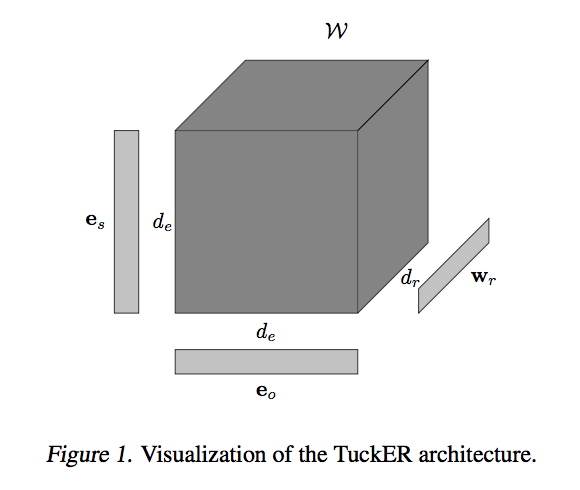
TuckER: Tensor Factorization for Knowledge Graph Completion This codebase contains PyTorch implementation of the paper: TuckER: Tensor Factorization f

A PyTorch implementation of a Factorization Machine module in cython.

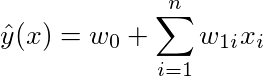
fmpytorch A library for factorization machines in pytorch. A factorization machine is like a linear model, except multiplicative interaction terms bet

Implementation of SSMF: Shifting Seasonal Matrix Factorization

SSMF Implementation of SSMF: Shifting Seasonal Matrix Factorization, Koki Kawabata, Siddharth Bhatia, Rui Liu, Mohit Wadhwa, Bryan Hooi. NeurIPS, 2021

PyTorch framework, for reproducing experiments from the paper Implicit Regularization in Hierarchical Tensor Factorization and Deep Convolutional Neural Networks

Implicit Regularization in Hierarchical Tensor Factorization and Deep Convolutional Neural Networks. Code, based on the PyTorch framework, for reprodu

Count the MACs / FLOPs of your PyTorch model.

THOP: PyTorch-OpCounter How to install pip install thop (now continously intergrated on Github actions) OR pip install --upgrade git+https://github.co

Multiple custom object count and detection using YOLOv3-Tiny method

Electronic-Component-YOLOv3 Introduce This project created to detect, count, and recognize multiple custom object using YOLOv3-Tiny method. The target

Count GitHub Stars ⭐

Count GitHub Stars per Day ⭐ Track GitHub stars per day over a date range to measure the open-source popularity of different repositories. Requirement

data/code repository of "C2F-FWN: Coarse-to-Fine Flow Warping Network for Spatial-Temporal Consistent Motion Transfer"

C2F-FWN data/code repository of "C2F-FWN: Coarse-to-Fine Flow Warping Network for Spatial-Temporal Consistent Motion Transfer" (https://arxiv.org/abs/

PyMove is a Python library to simplify queries and visualization of trajectories and other spatial-temporal data

Use PyMove and go much further Information Package Status License Python Version Platforms Build Status PyPi version PyPi Downloads Conda version Cond

Comments
  • packaging?

    packaging?

    hi @willtownes , really looking forward to try this out! Is there any chance that this will get pip installable in the near future? Happy to contribute if you think it's useful.

    opened by giovp 3
  • Example notebook

    Example notebook

    Dear @willtownes,

    Thanks for making the code for Nonnegative Spatial Factorization available! I really want to start playing with this. Would it be possible for you to create a Jupyter/Colab Notebook so make it easier to start?

    Best, Pedro

    opened by pedrofale 1
Releases(v1.0)
Owner
Will Townes
Will Townes
Framework to build and train RL algorithms

RayLink RayLink is a RL framework used to build and train RL algorithms. RayLink was used to build a RL framework, and tested in a large-scale multi-a

Bytedance Inc. 32 Oct 07, 2022
Domain Adaptation with Invariant RepresentationLearning: What Transformations to Learn?

Domain Adaptation with Invariant RepresentationLearning: What Transformations to Learn? Repository Structure: DSAN |└───amazon |    └── dataset (Amazo

DMIRLAB 17 Jan 04, 2023
[SIGGRAPH Asia 2021] Pose with Style: Detail-Preserving Pose-Guided Image Synthesis with Conditional StyleGAN

Pose with Style: Detail-Preserving Pose-Guided Image Synthesis with Conditional StyleGAN [Paper] [Project Website] [Output resutls] Official Pytorch i

Badour AlBahar 215 Dec 17, 2022
A Japanese Medical Information Extraction Toolkit

JaMIE: a Japanese Medical Information Extraction toolkit Joint Japanese Medical Problem, Modality and Relation Recognition The Train/Test phrases requ

7 Dec 12, 2022
A modification of Daniel Russell's notebook merged with Katherine Crowson's hq-skip-net changes

Edits made to this repo by Katherine Crowson I have added several features to this repository for use in creating higher quality generative art (featu

Paul Fishwick 10 May 07, 2022
Ipython notebook presentations for getting starting with basic programming, statistics and machine learning techniques

Data Science 45-min Intros Every week*, our data science team @Gnip (aka @TwitterBoulder) gets together for about 50 minutes to learn something. While

Scott Hendrickson 1.6k Dec 31, 2022
[ICLR 2022] DAB-DETR: Dynamic Anchor Boxes are Better Queries for DETR

DAB-DETR This is the official pytorch implementation of our ICLR 2022 paper DAB-DETR. Authors: Shilong Liu, Feng Li, Hao Zhang, Xiao Yang, Xianbiao Qi

336 Dec 25, 2022
Official implementation of TMANet.

Temporal Memory Attention for Video Semantic Segmentation, arxiv Introduction We propose a Temporal Memory Attention Network (TMANet) to adaptively in

wanghao 94 Dec 02, 2022
A naive ROS interface for visualDet3D.

YOLO3D ROS Node This repo contains a Monocular 3D detection Ros node. Base on https://github.com/Owen-Liuyuxuan/visualDet3D All parameters are exposed

Yuxuan Liu 19 Oct 08, 2022
EvoJAX is a scalable, general purpose, hardware-accelerated neuroevolution toolkit

EvoJAX: Hardware-Accelerated Neuroevolution EvoJAX is a scalable, general purpose, hardware-accelerated neuroevolution toolkit. Built on top of the JA

Google 598 Jan 07, 2023
Jupyter notebooks for the code samples of the book "Deep Learning with Python"

Jupyter notebooks for the code samples of the book "Deep Learning with Python"

François Chollet 16.2k Dec 30, 2022
Notes taking website build with Docker + Django + React.

Notes website. Try it in browser! / But how to run? Description. This is monorepository with notes website. Website provides web interface for creatin

Kirill Zhosul 2 Jul 27, 2022
MARS: Learning Modality-Agnostic Representation for Scalable Cross-media Retrieva

Introduction This is the source code of our TCSVT 2021 paper "MARS: Learning Modality-Agnostic Representation for Scalable Cross-media Retrieval". Ple

7 Aug 24, 2022
PECOS - Prediction for Enormous and Correlated Spaces

PECOS - Predictions for Enormous and Correlated Output Spaces PECOS is a versatile and modular machine learning (ML) framework for fast learning and i

Amazon 387 Jan 04, 2023
Contextual Attention Network: Transformer Meets U-Net

Contextual Attention Network: Transformer Meets U-Net Contexual attention network for medical image segmentation with state of the art results on skin

Reza Azad 67 Nov 28, 2022
Adaptation through prediction: multisensory active inference torque control

Adaptation through prediction: multisensory active inference torque control Submitted to IEEE Transactions on Cognitive and Developmental Systems Abst

Cristian Meo 1 Nov 07, 2022
Structured Data Gradient Pruning (SDGP)

Structured Data Gradient Pruning (SDGP) Weight pruning is a technique to make Deep Neural Network (DNN) inference more computationally efficient by re

Bradley McDanel 10 Nov 11, 2022
Pytorch implementation of COIN, a framework for compression with implicit neural representations 🌸

COIN 🌟 This repo contains a Pytorch implementation of COIN: COmpression with Implicit Neural representations, including code to reproduce all experim

Emilien Dupont 104 Dec 14, 2022
Official code for our CVPR '22 paper "Dataset Distillation by Matching Training Trajectories"

Dataset Distillation by Matching Training Trajectories Project Page | Paper This repo contains code for training expert trajectories and distilling sy

George Cazenavette 256 Jan 05, 2023
Ludwig is a toolbox that allows to train and evaluate deep learning models without the need to write code.

Translated in 🇰🇷 Korean/ Ludwig is a toolbox that allows users to train and test deep learning models without the need to write code. It is built on

Ludwig 8.7k Jan 05, 2023